




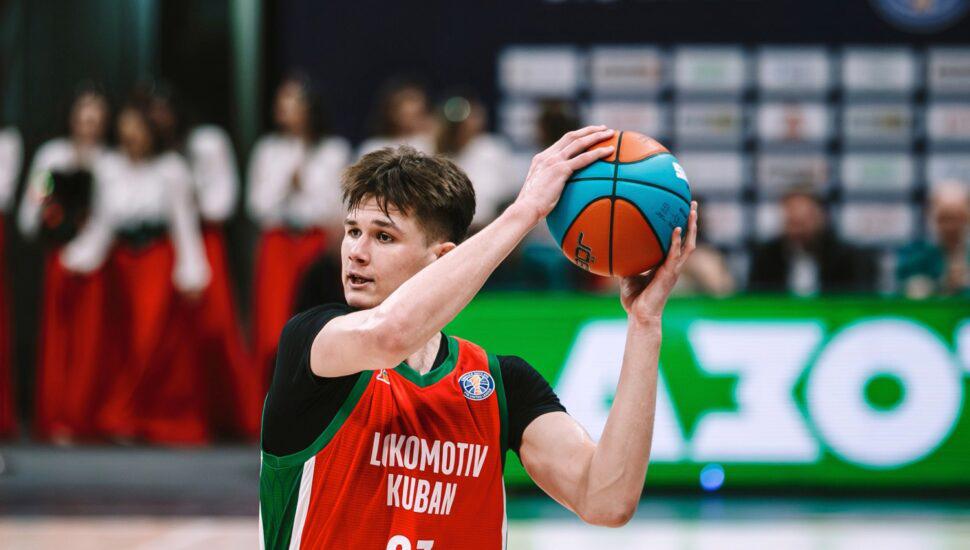
Lokomotiv Kuban guard Vsevolod Ishchenko gave a detailed interview to our information partner, the Championat portal.
- You missed the start of the regular season due to injury and surgery, but still, this season has already been a real breakthrough for you. How do you explain this leap forward?
- It's bad to start the second season in a row with an injury, and the exact same one, but on the other leg. However, I think everything will be fine now in that regard. It's the kind of spot where, once the surgery is done, nothing else should happen. As for this season, I think I've simply started getting more playing time, gotten a little stronger physically, and become more mentally stable in terms of decision-making on the court. I've always had this in mind: if you work hard, everything will work out. But in any case, there's a lot of room for my improvement.
- Is it true that you've grown taller this year? How much taller have you gotten?
- About 1.5 or 2 inches. At the beginning of last season, I was 6'6". Now, I'm like 6'7"-6'8". Maybe even more in sneakers.
- Recently, you set a VTB United League record for rebounds among guards. During that game against Yenisei, did you realize you were going for it? Or did you only find out afterward?
- If I'm not mistaken, it was Alen [Hadzibegovic] first game for Lokomotiv. He immediately made our rebounds easier. At halftime, the coach remarked that we were controlling the rebounds well. I noticed that I grabbed more than usual. And then the assistants came up to me and said, "Keep going, you've already got 8 rebounds." But, honestly, of the 15 I grabbed, 4 or 5 just fell into my lap. And the rest—yeah, I fought for them.
- Some say that rebounds are less about height and more about determination. Do you agree?
- If you want to get the ball, you'll jump for it. Or you'll put your back to your opponent so they don't get the rebound. So yes, rebounding is about determination. In basketball, I suppose, everything is about determination.
- You also lead the league in blocked shots among backcourt players.
- I didn't know that.
- No other guard blocks so many shots. How do you do it?
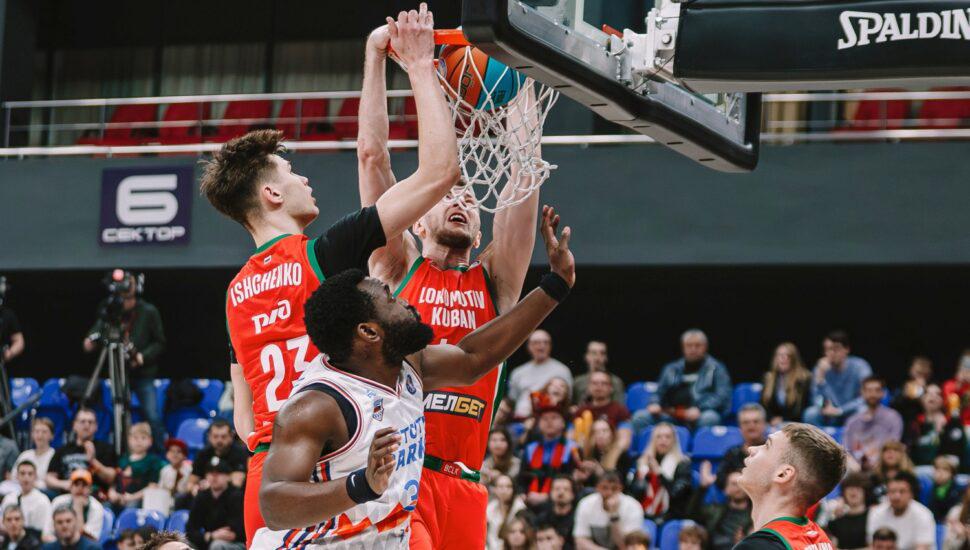
- It's probably due to my anthropometry. I'm tall and often guard shorter players. As for the taller ones, I'm usually faster and jumpier than them. Plus, I have long arms. And, honestly, I've had a natural feel for the game since I was a kid. Now, I block more shots by jumping. But when I was shorter, I used instinct. I'd jump behind someone, knock the ball away while the player was picking it up.
- How important are statistical achievements for you?
- The win – that is what the most important to me. If we win, it doesn't matter how much I score. But, for sure, it's good when winning games combine with some statistical achievements.
- Before the season, you said you wanted to reach 10 points + 4 rebounds + 3 assists and shoot more threes. Right now, you have 9+5+2 and long-range shooting 50% on 1.5 attempts—is that okay? Or do you want to improve even more by the end of the season?
- For sure, there's a lot to improve room for me. For example, in terms of being more confident in taking on attacks. I'd like to become bolder in interrupting the other team's plays, in shooting in 50-50 situations. My older teammates can do that, but I'm not yet so confident in taking three-point shots. But I think the progress in that regard is good. I just need to keep working, and I think everything should work out.
- You do a lot on the court—offensively, rebounding, and defending. Does your coach ask you to always be involved? Or does it happen naturally?
- Surely, the coach demands full focus throughout the entire game. It's very difficult. It's still a game, after all, and everything can change quickly, turning upside down. But then again, a lot in basketball—and probably in any sport—depends on desire. If you want rebounds, blocks, and steals, and you're really motivated, they'll come, even if the odds aren't in your favor. If you just want it, the basketball gods will make it happen.
- This year, you've been getting more than 30 minutes on the court on numerous occasions. How do you cope with that kind of workload?
- I'm fine. I've always played a lot throughout my career, more than 30 minutes both in the DYuBL championship and in the youth team. My first season with the main team, I'd say, was a learning curve. In the second half of that season, I got more playing time, but it's not really hard for me. It's nice. It gives me extra motivation when my coach trusts me. And when my teammates do too.
- Do you feel that the coaches' trust in you has increased?
- Yes, I feel it. It's nice either way, but there's another side to the coin: at training sessions, I get more rebukes than anyone else (smiles). But it's nice that they demand a lot of you. It means people care. Because of that, I have to be hyper-focused at all times—at any training session. It doesn't matter if it's shooting or non-contact. I always have to be 200% focused.
- It's good for you, right?
- Of course. This approach will only make me better. I just need to be more patient. Physically, I have enough strength, but mentally… I just need to remain restrained.
- How do you rate your game at the moment?
- I believe that I can always do better. Sometimes people criticize me for not being able to praise myself or something like that. But I feel like what I'm showing now isn't even close to half of my capabilities. Sometimes I even get upset because, say, I decided to take a break on offense when I could have helped the team. I review my every game, look for mistakes, and they're always there. You can always play much better than you actually did.
- You're getting a lot more attention now. Do you enjoy it? Or are you still getting used to being in the spotlight?
- At the VTB All-Star Game I was asked, if I felt like a star. I said, "Of course not." My teammates were Nikita Kurbanov, Andrei Vorontsevich, Dmitry Kulagin, Andrei Zubkov, and Georgy Zhbanov. I wouldn't call Kulagin or Zhbanov veterans. And neither would Zubkov. But the rest of them—they're already legends. These are people who have achieved success on the international stage with the Russian national team, showing results for 15 years. They've played in the Euroleague and everywhere else—they have a wealth of experience. And so they're stars, while I'm still a young player.
- How does this newfound attention feel? People interview you, come up to you for photos, and so on.
- I'm part of a new generation of players, so to speak. I don't think it's a problem for us at all. Everything is changing now, and a lot depends on the media—image, status. You need to devote time to it, but it shouldn't be the primary focus. Basketball, training, and self-improvement come first. And media activities come second.
- Together with the league, we at Championat.com are ranking the best young players in Russia, and you're consistently in the top three, along with Gleb Firsov and Yegor Ryzhov. Do you expect to win an award at the end of the season?
- Both Firsov and Ryzhov are getting very good minutes; they're integral parts of their teams. And it seems like the competition has been even all season, I'd say. But that's not the most important thing, either. If I win, then I'll be pleased. If not, no big deal.
- You and Firsov are both from Rostov-on-Don, aren't you?
- Yes, we played on the same team at our first Russian youth championship. We were always competing, and then one year, I think, it was 2018, we just happened to be on the Rostov Region team. We took 9th place, which Rostov never reached before. But everyone was a bit disappointed, because the team we beat by +30 ended up finishing 5th. Then fate separated us. I went to another team, and he stayed and played for another two years, and then moved to Parma.
- Lokomotiv made a coaching change midseason. What do you think didn't work out for Anton Yudin as a coach?
- I don't know all the details. Due to surgery, I missed the preseason, so it's hard for me to judge how the preparations went. During the championship, both the coach and the team kept working, not paying attention to rumours. I think that's the right approach. No matter what happens, you have to keep doing your job. As for changing coaches mid-season, it's always a shock for any team. We experienced that too. But that's the way sport works; changes are normal in sports. And then Tomislav Tomović arrived. We spent the first week or week and a half getting used to him. He liked us, and we liked him. I think we're doing well now in terms of mutual understanding.
- How has the situation in the team changed since the appointment of a new coach?
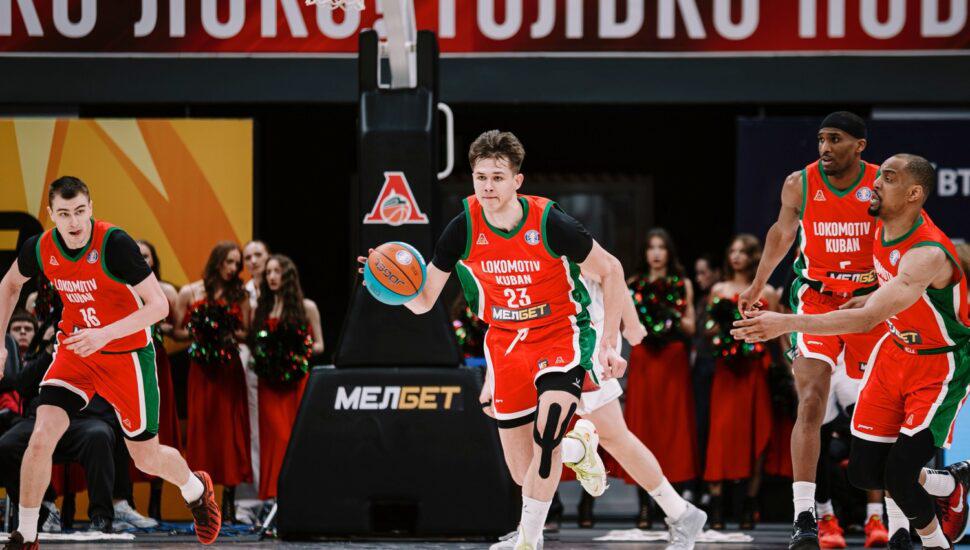
- I think we've become more focused as a team, more cohesive on offense, and more aggressive on defense. Maybe we've all become more confident. I don't know if the coaching change has had a big impact or if it's just the way the season has progressed and we've picked up the pace. But we've gotten better.
- Do you like the playing philosophy that Tomović is building at Lokomotiv?
- Yes, 100%. Aggressive defense, quick transitions, team play–I like it all. All the teams I've been on before had the same philosophy. I don't know if it's because it's Lokomotiv or if it's just the same thing all the time. But I like it all, everything suits me.
- Lokomotiv struggles against Top-4 opponents throughout the season. Why?
- We can't figure it out either. We've lost three games against CSKA late in clutch. In one of them, Livio Jean-Charles scored with 0.6 seconds left. I don't know why we're having such trouble. We've lost all 4 games against UNICS in clutch. We're probably just unlucky right now. But we've been talking in the locker room about how if we're unlucky now, we'll be lucky in the playoffs. I think that's how it should work out.
- But the playoffs are a completely different story. How do you rate BETCITY PARMA, who you'll be facing in the first round?
- They have a well-built system, a great team spirit, they always fight to the very end. What's happening at their arena, Molot, is a whole other story. It's really tough to play there. The support is incredibly loud—just like we have at Basket Hall. I think it's tough for other teams to come to us, too. PARMA has some good young players—Firsov, Lev Svinin, and Ivan Yegorov have been playing at a high level lately. They have experienced Russian players, all confident. They also have some foreign players who are really getting going. I think it'll be very interesting.
- What do you prioritize when preparing for the playoffs?
- Ourselves. It doesn't matter who the opponent is, as long as we do everything right and play aggressively—the way the coach demands of us and the way we know and can.
- What do you think could be the decisive advantage for Lokomotiv in the fight for top spots?
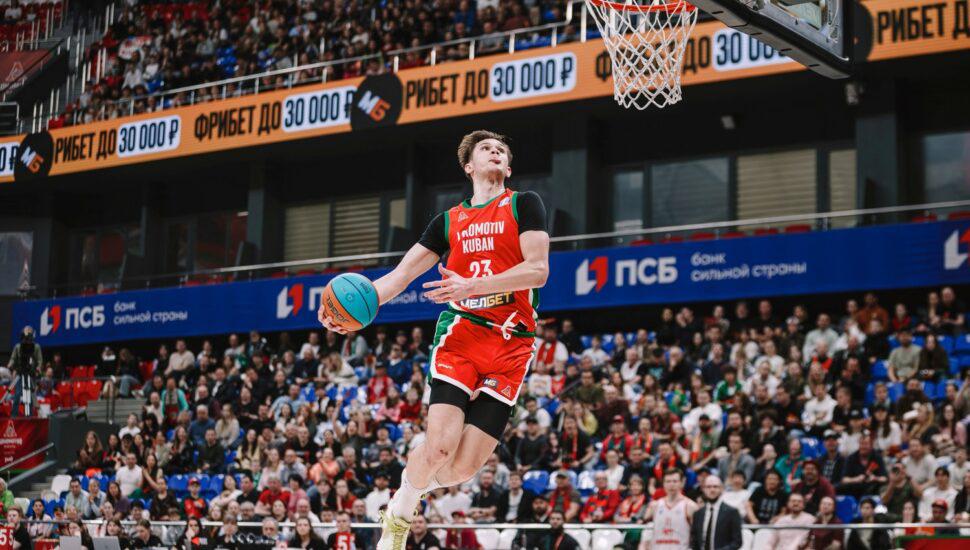
- It's probably the determination to give it all on defense and fight for every ball. I think our offense is always pretty good, but it gets much better when we defend well and make quick transitions. So, the most important thing for us is defense and staying focused in that aspect of the game. And working on rebounds. And most importantly, staying 100% healthy. In the playoffs, that's also a big deciding factor. If one or two players are out, it's basically all over for the team that's losing players to injury. But, first and foremost, it all depends on us.
- Last year, you had your first experience of the VTB United League playoffs, even though you didn't play much. Would you say you know what to expect? Or is there still some excitement and uncertainty?
- No, I wasn't particularly nervous last year either. These are the same games, just a knockout ones. Of course, the responsibility, the pressure, and the determination of all the players increase, but you have to avoid burning out. The most important thing is not to get overexerted if the situation doesn't require it.
- Your big loss to CSKA allowed them to become the regular season champions. What do you think happened in that game?
- We started that game well: stopped their leaders, moved the ball well in the 1st quarter, got a six- or seven-point lead. But then we just couldn't defend, started losing rebounds, conceding easy points. And CSKA is the kind of team that, once they get their game together, is very hard to stop. I think they're the most organized team in the VTB United League. Mutual understanding is their strong point. They've been playing with quite the same roster for 3 or 4 seasons in a row.
- Do such defeats hit the mood hard?
- Of course, it's unpleasant to lose by 30 points, or, God forbid, 40. But that's sport. The most important thing is to be able to switch gears and not dwell on the bad things. On the contrary, try to even learn something useful. Losing by such a margin makes you think: is there really nothing we can do to counter it? And that only makes us angrier, I would say.
- Lokomotiv has a few regular season games left. What's your motivation going into these games? They have no tournament significance at all.
- We need to finish the season good. It's crucial for us to continue to fine-tune our game and teamwork. There's always room for improvement, and we'll probably focus more on our game than on beating anyone else. It's always been important for us to focus on ourselves first.
Share with Friends: